







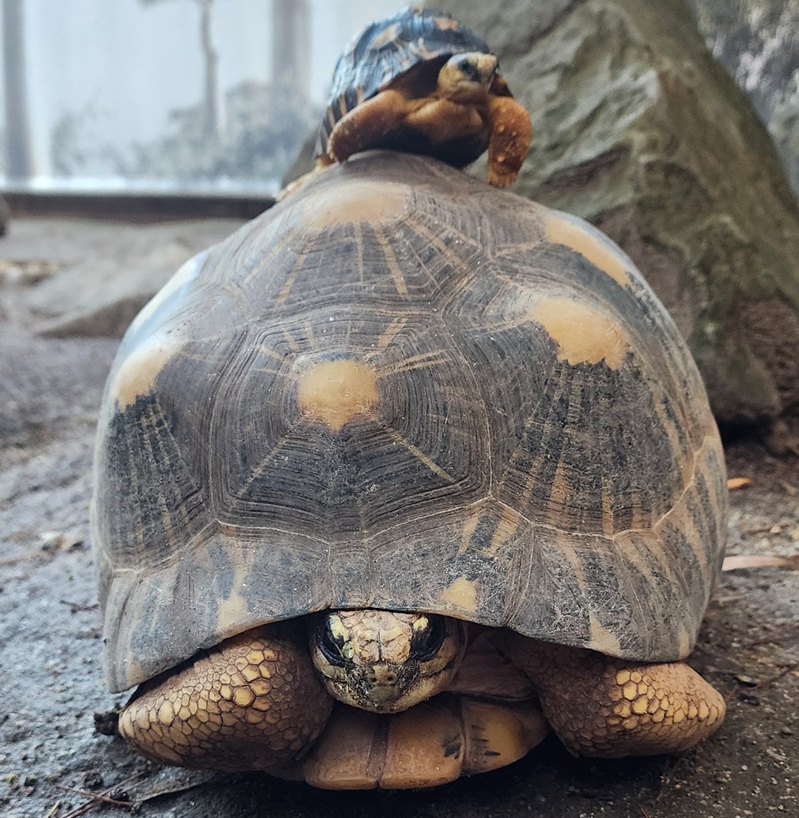
Central Coast Zoo participates in global efforts to preserve the Radiated tortoise.
Conservation in action and fun learning experiences
—From the local California condor to the southern Madagascar Radiated tortoise, the Central Coast Zoo plays a role in global species conservation and animal well-being. A visit to the zoo is more than an opportunity to see and learn about endangered animals from around the world. It is a way to support local and global conservation efforts and an opportunity to be part of activities that help protect threatened species.
The local zoo is accredited by the Association of Zoos and Aquariums (AZA), and is one of only 254 zoos worldwide that meet the highest standards for animal care, conservation, and educational experiences. AZA-accredited zoos work to save animals from extinction through global programs for preserving threatened animals, monitoring endangered natural habitats, breeding, and reintroducing animals to their native habitats.
“Reintroducing an animal into their natural habitat isn’t as easy as turning them loose,” said Dr. Cynthia Stringfield, director of the Central Coast Zoo. “It involves making sure their habitats are reestablished and safe so that the species survives and flourishes.” Carefully monitored breeding programs make sure there are healthy animals ready to be released, and habitat monitoring makes sure that habitats are sufficiently restored to support the future of the animals.
When visiting makes a difference
Visiting the Central Coast Zoo is a much grander experience than walking around admiring the over 300 animals that represent 100 threatened species. It’s an opportunity to learn ways to save threatened animals, make a difference for their habitats, and life on the planet.
The zoo has several fun and educational programs and events throughout the year, and any time is the perfect time to visit.
- Keeper chats, held every weekend, are educational, hands-on opportunities to learn about featured animals directly from the zoo staff.
- Children’s camps, held in spring and summer, are excellent fun ways for exploring the natural world and learning how to be an ally for wildlife.
- Volunteering is the chance to be part of the behind-the-scenes experiences with zoo operations, working on everything from the gift shop and events to replanting habitats and helping prepare the animals’ diets.
- The downloadable Central Coast Zoo Activity Learning Book, available from the website, introduces kids to biodiversity hotspots around the world, filled with rare animals and plants found nowhere else.
Fun events are held throughout the year. Upcoming events include a Valentine’s Day event, details to be announced soon, and the annual Party for the Planet that celebrates Earth Day every April. Check the website regularly or follow the zoo on social media for announcements.
Condors, butterflies, and tortoises
Dr. Stringfield has first-hand experience with preserving and reintroducing endangered species through her work with the California condors. “I was part of that program from the start,” she said. “And now, the Central Coast Zoo is working in the field with the Ventana Wildlife Society to vaccinate condors.
“We also assist the Xerxes Society with its annual Western monarch butterfly count at local overwintering sites, and this year, we are helping with the new tagging program,” Stringfield said. She also reports that, in partnership with the San Luis Obispo County Master Gardeners’ program, the zoo is establishing a monarch and pollinator garden at the Highway 41 off-ramp in Atascadero.
“We are also part of the global program preserving the endangered Madagascar Radiated tortoise,” she said. “This tortoise is a good example of the perils of leaving an animal alone in its threatened habitat, or releasing it too soon.”
The threats to the Radiated tortoise include poaching for the pet trade, food, and medicine. Its habitat is threatened by deforestation for agriculture and charcoal, and invasive species. When an animal is endangered, leaving it alone or attempting to return it before its habitat is stabilized is a path to extinction. While the AZA is continuing educational and environmental efforts in Madagascar, accredited zoos, including the Central Coast Zoo, are working to save this tortoise for the future. Visit the Radiated tortoise on your next trip to the Central Coast Zoo and learn what you can do to save it.
The zoo is located at 9100 Morro Road, Atascadero. For events, admission, membership, volunteer applications, hours, and more information, visit centralcoastzoo.org, follow on social media, or call (805) 461-5080.
—Jackie Iddings