






The thin, weary bear wandered through the brush and down to the edge of a lake among the dunes. He stopped and sniffed the air before lowering his head to drink. He didn’t sense the men watching him through the brush and never knew what hit him when the bullets from their guns took his life.
The men, from Gaspar de Portola’s 1769 expedition, were delighted with the kill, although they would have preferred a little more meat on the bear. Nonetheless, they skinned it and roasted the meat over their fire as they camped by this unusual freshwater lake so close to the ocean. “We should name this place after the bear,” one of the men said. And legend has it that they named it Oso Flaco, after that skinny bear.
The next morning dawned on several dead men. The Chumash sometimes left tainted meat out for predators to reduce competition for food. The toxins passed from the bear meat to the Spaniards, killing several of the exploration party.
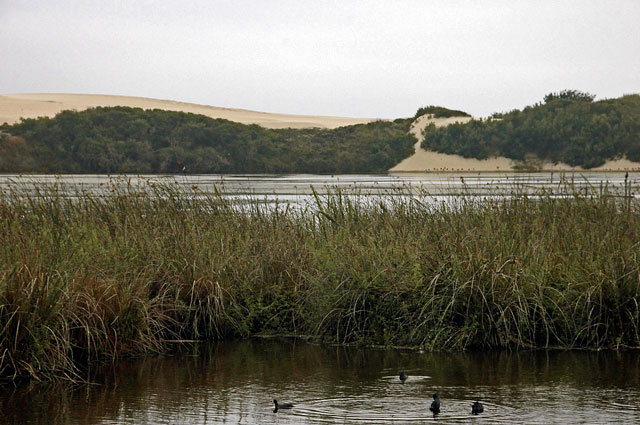
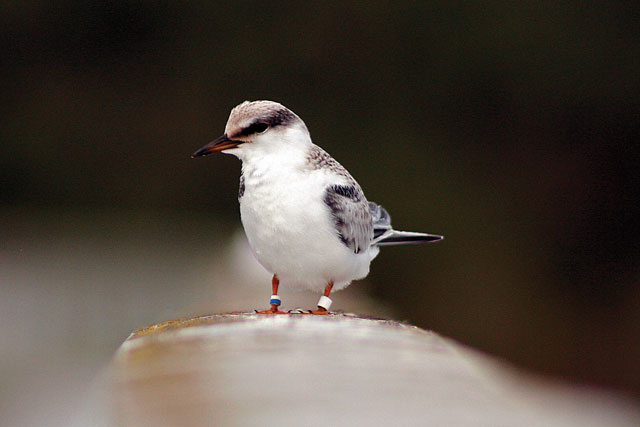
Today, no more bears are reported to visit the lake, but it is a favorite spot for bird watchers and nature lovers. Swallows and terns flit about the tules. Many species of ducks paddle about, upending themselves to feed on the lush vegetation on the bottom. Double-crested cormorants perch on driftwood in the middle of the lake, and American white pelicans drift up and down while egrets and herons feed in the shallows.
The Oso Flaco Natural Area
Oso Flaco Lake is in the Oso Flaco Natural Area, a protected area within the Oceano Dunes State Vehicular Recreation Area. Vehicles are not allowed in this section of the park due to the sensitive habitats, and the area is only open to the public from October through February. It is closed during the Western snowy plover nesting season.
The trail wanders along Oso Flaco Creek, among Spanish moss-draped willows and wax myrtles, onto a bridge that spans the lake, then to a boardwalk leading into the dunes and the ocean.
Wildlife of all kinds live, feed, and travel along the creek and in and around the lake. Once on the bridge over the lake, the water is fairly clear, and fish, frogs, and other amphibians are often easily spotted. The Western snowy plover shares this area with a wide variety of birds, reptiles, mammals, and many kinds of plants.
Keep binoculars and a camera handy. There are benches along the way to rest and absorb the experience. Be sure to follow all of the signage while exploring the dunes and the beach.
The Oso Flaco Natural Area shares a boundary with the Guadalupe-Nipomo Dunes National Wildlife Refuge. At least one visit to this beautiful natural area is pretty much required.
The Lost City of Cecil B. DeMille
The 1923 film, “The Ten Commandments,” directed by Cecil B. DeMille, was filmed in the dunes. At the end of filming, the set was buried in the sand. Artifacts from the set occasionally surface and are added to the collection of the film’s memorabilia housed in the Guadalupe-Nipomo Dunes Center. It’s well worth stopping by the center at 1065 Guadalupe Street, Guadalupe. Learn more about the Oso Flaco area, the national wildlife refuge, and the filming of “The Ten Commandments.”
The center is open Tuesday-Saturday, 10 a.m.-3 p.m. or by appointment. For admission and more information, visit dunescenter.org.
Getting to Oso Flaco Lake
To get to the lake and trail, turn west onto Oso Flaco Lake Road from Highway 1. A gate at the end of the parking lot marks the trailhead. Sorry, no pets allowed on the trail.
Oso Flaco Lake Road is located three miles north of Guadalupe and just south and west of Nipomo. The road dead ends, and there is vehicle parking in the lot for a small fee, or you can park just outside of the lot on the side of the road and walk in. For more information, visit parks.ca.gov/?page id=30597.